


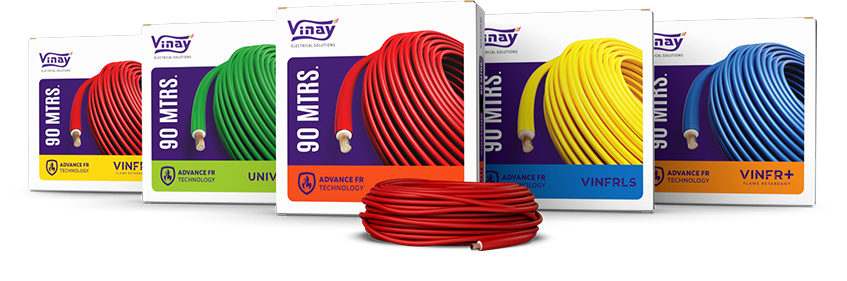
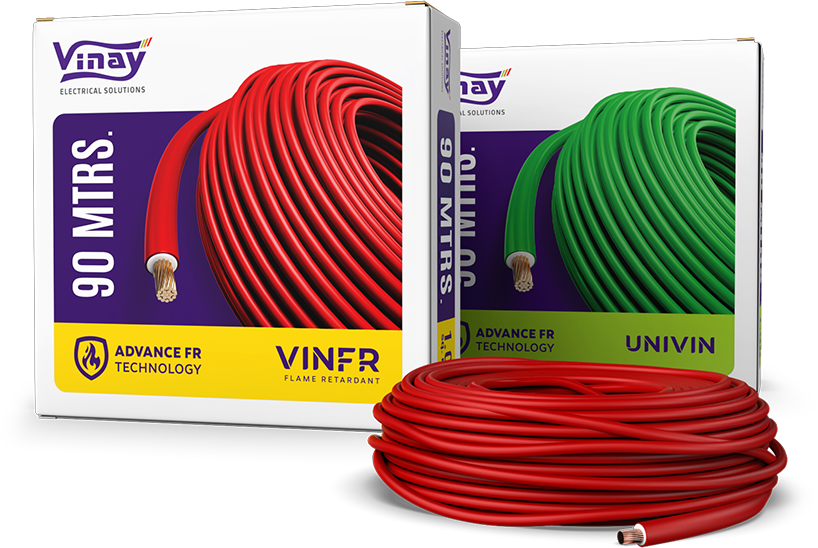
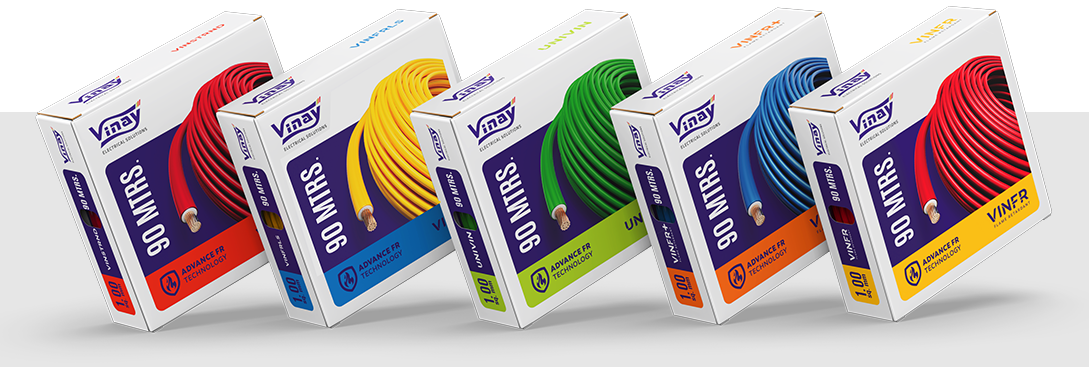
Wires That Power With Purpose

Engineered using the finest materials, our wires meet the most demanding mechanical and electrical standards.
Rigorously tested and trusted across residential, commercial, and industrial projects, they offer uncompromising protection, day after day.
Wires
Built for Reliability.Trusted for Safety.
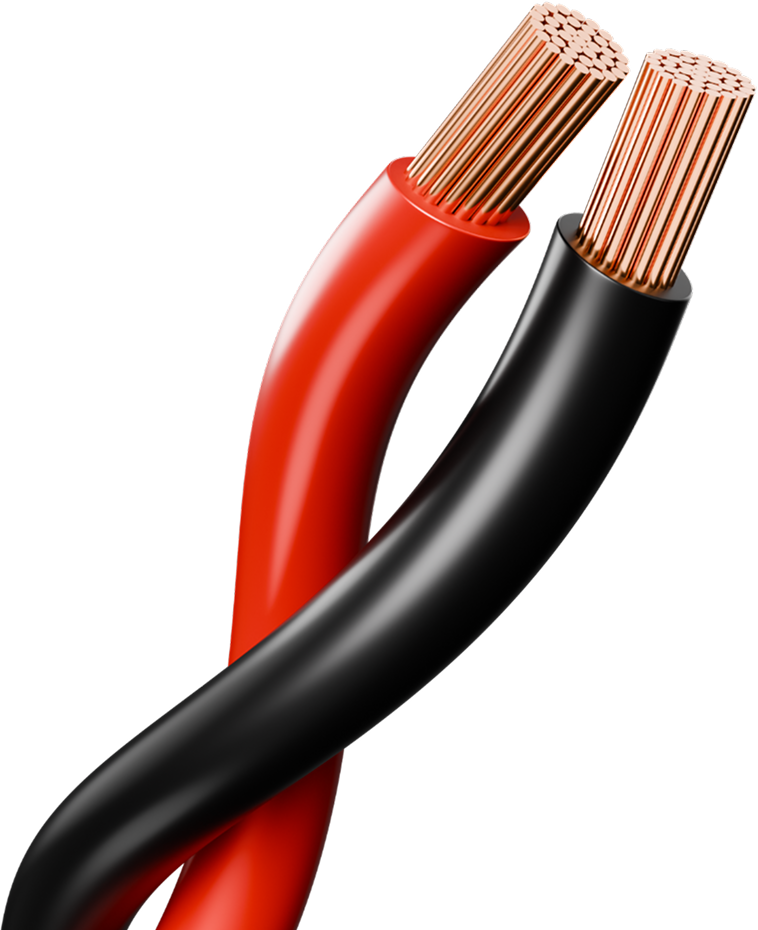
Pure electrolytic copper conductor uniformly bunched for better conductivity
Flexible to withstand bending / stretching during installation
Durable sheath protects against wear and tear
Wires

Engineered for Optimum Safety
With Zero Compromise

With over 55 years of expertise, we craft high-quality wires that ensure safety, reliability, and performance.
Designed to empower lives and protect every space they touch.
Wires
FAQ's

Why are electrical wires and cables considered the backbone of any electrical installation?

Electrical wires and cables act as the nervous system of any space. They carry power continuously across walls, ceilings, and concealed areas. Any compromise in wire quality directly impacts safety, efficiency, and long-term reliability of the entire electrical system.

How do substandard wires pose serious safety and fire risks?

Substandard wires can overheat, degrade insulation, and fail under load. This may result in short circuits, electrical fires, or complete system failure, often without visible warning signs.

Why are wires often the most overlooked yet most critical electrical component?

Wires are concealed after installation and are not visible during daily use. Because they cannot be easily inspected later, initial selection and installation quality become critically important.

Why should consumers actively ask about the brand and type of wires used in their space?

In many cases, wire selection is decided by builders or contractors. Consumers should insist on knowing the brand, type, and specification of wires used, as these determine long-term safety and performance.

Is it advisable to rely only on builders or contractors for wire selection decisions?

While builders and contractors manage execution, wire selection should be an informed decision involving the consumer, especially since wires remain in use for decades.

What types of wires and cables are offered by Vinay Electrical Solutions?

Vinay Electrical Solutions offers house wires, flexible cables, multicore cables, CCTV cables, submersible cables, and specialised insulated cables for varied residential, commercial, and utility applications.

What are house wires and where are they typically used?

House wires are single-core insulated conductors used for internal electrical wiring in homes, offices, and commercial buildings.

What are flexible cables and their common applications?

Flexible cables consist of multiple fine copper strands and are used for appliances, extension cords, and movable equipment where flexibility is required.

What are multicore cables and how are they different from single-core wires?

Multicore cables contain multiple insulated conductors within a single sheath and are commonly used for structured wiring, control panels, and applications requiring organised cable routing.

What are CCTV cables and why are they different from regular electrical cables?

CCTV cables are designed for signal transmission and power supply to surveillance equipment. They are engineered to minimise signal loss and interference, unlike regular power cables.

What are submersible cables and where must they be used?

Submersible cables are specifically designed to operate under water and are used for borewell and submersible pumps. Regular cables must never be used for such applications.

In what standard lengths are Vinay wires and cables available?

Vinay wires and cables are available in standard coil and drum lengths as per product category, facilitating ease of installation and reduced jointing.

What does conductor size (sq. mm) mean and why is it important?

Conductor size defines the current-carrying capacity of a wire. Incorrect sizing can lead to overheating, voltage drop, and unsafe operation.

What happens when a lower gauge wire is used where a higher gauge is required?

Using a lower gauge wire for higher loads causes excessive heating, insulation breakdown, and increased fire risk over time.

Can using a higher gauge wire than required create inefficiencies or cost issues?

While electrically safer, higher gauge wires increase material cost and may be unnecessary if load requirements do not justify them. Correct sizing ensures safety and efficiency.

Why is copper purity critical in electrical wiring?

Higher copper purity ensures better conductivity, lower resistance, reduced heat generation, and improved energy efficiency.

What grade of copper is used in Vinay wires and cables?

Vinay wires use high-purity electrolytic copper, ensuring consistent conductivity and reliable electrical performance.

Why do the number of copper strands and strand thickness matter?

Proper strand count and thickness ensure flexibility, current capacity, and compliance with standards. Deviations can compromise performance and safety.

What certifications and standards do Vinay wires comply with?

Vinay wires are manufactured in compliance with applicable Indian Standards and undergo quality checks to meet conductor and insulation specifications.

What does FR mean in electrical wires and why is it important?

FR (Flame Retardant) insulation resists flame propagation, reducing the spread of fire during electrical faults.

What is FRLS and how is it different from FR insulation?

FRLS (Flame Retardant Low Smoke) wires emit lower smoke and toxic gases during fire, improving visibility and evacuation safety.

What do HR-FRLS, ZHFR, and LS insulation types signify?

These insulation types offer enhanced resistance to heat, reduced smoke emission, and lower halogen content, improving fire safety in critical environments.

What is XLPE insulation and how is it different from PVC insulation?

XLPE insulation offers superior thermal resistance, mechanical strength, and longevity compared to PVC, making it suitable for higher temperature and demanding applications.

How do fire-retardant wires help reduce fire spread and smoke hazards?

Fire-retardant and low-smoke wires limit flame spread and toxic emissions, significantly reducing damage and risk to occupants during fire incidents.

Can the right insulation choice reduce energy losses and operating costs?

Yes. Better insulation and higher copper purity reduce resistive losses, contributing to improved efficiency and lower long-term energy wastage.

How do rodent-resistant wires enhance long-term safety?

Rodent-resistant insulation reduces the risk of insulation damage caused by rodents, which is a common cause of short circuits and fires.

How do heat, moisture, and aging affect wire performance over time?

Environmental exposure gradually degrades insulation. High-quality materials slow this process, ensuring safer long-term operation.

How does insulation thickness impact durability and safety?

Correct insulation thickness ensures electrical safety and mechanical protection. Excess insulation with reduced copper content is a common sign of substandard wires.

How can a consumer identify a substandard electrical wire?

Substandard wires often have fewer copper strands, thinner conductors, excessive insulation, or visibly dull copper.

Why do some wires have thicker insulation but lower copper content?

This is often done to reduce copper cost while maintaining overall wire diameter, misleading consumers on actual current capacity.

What are the risks of refurbished or low-purity copper conductors?

Refurbished copper has higher resistance, heats up faster, and degrades insulation more quickly, increasing fire risk.

How do IS standards define conductor strands and insulation thickness?

IS standards specify exact strand count, conductor diameter, and insulation thickness to ensure safety and performance consistency.

How should the correct wire size be selected for different electrical loads?

Wire size should be selected based on connected load, circuit length, and application type, not cost considerations.

Why must wire selection align with switchgear ratings and appliance load?

Proper coordination ensures that protective devices function correctly and prevents overheating or nuisance tripping.

Are different wires required for lighting, power, HVAC, CCTV, and submersible pumps?

Yes. Each application has distinct electrical and environmental requirements that demand appropriately designed cables.

Why do cost-driven compromises in wire selection create long-term risk?

Initial savings often result in higher maintenance costs, energy losses, and increased safety hazards over time.

Can incorrect wire selection increase electricity losses and maintenance costs?

Yes. Higher resistance leads to heat loss, inefficiency, and potential premature system failure.

Do electrical wires come with a warranty?

No. Electrical wires do not come with a conventional warranty. They are passive conductors whose performance depends on correct installation and usage conditions.

What assurance is provided on Vinay wires and cables?

Vinay provides assurance on copper purity, insulation quality, and compliance with applicable standards at the time of supply.

How can copper purity be verified at the time of installation?

Copper conductors should appear bright and clean. Any blackening or oxidation indicates deterioration and the wire should not be installed.

What does blackening of copper indicate and what should be done?

Blackening indicates oxidation or improper storage. Such wires should be rejected before installation.

Does the manufacturer have any liability after wire installation?

Once installed, the manufacturer has no control over loading, environment, or workmanship. Responsibility thereafter lies with installation quality and usage conditions.
Wire-&-Cables